Middle East Weekly Brief 25.01 - 31.01.2026

Iran edges closer to confrontation as diplomatic efforts are underway, Gaza ceasefire enters the second phase, and Iraq confronts a divisive political return as it nears naming a new prime-minister
Main Story
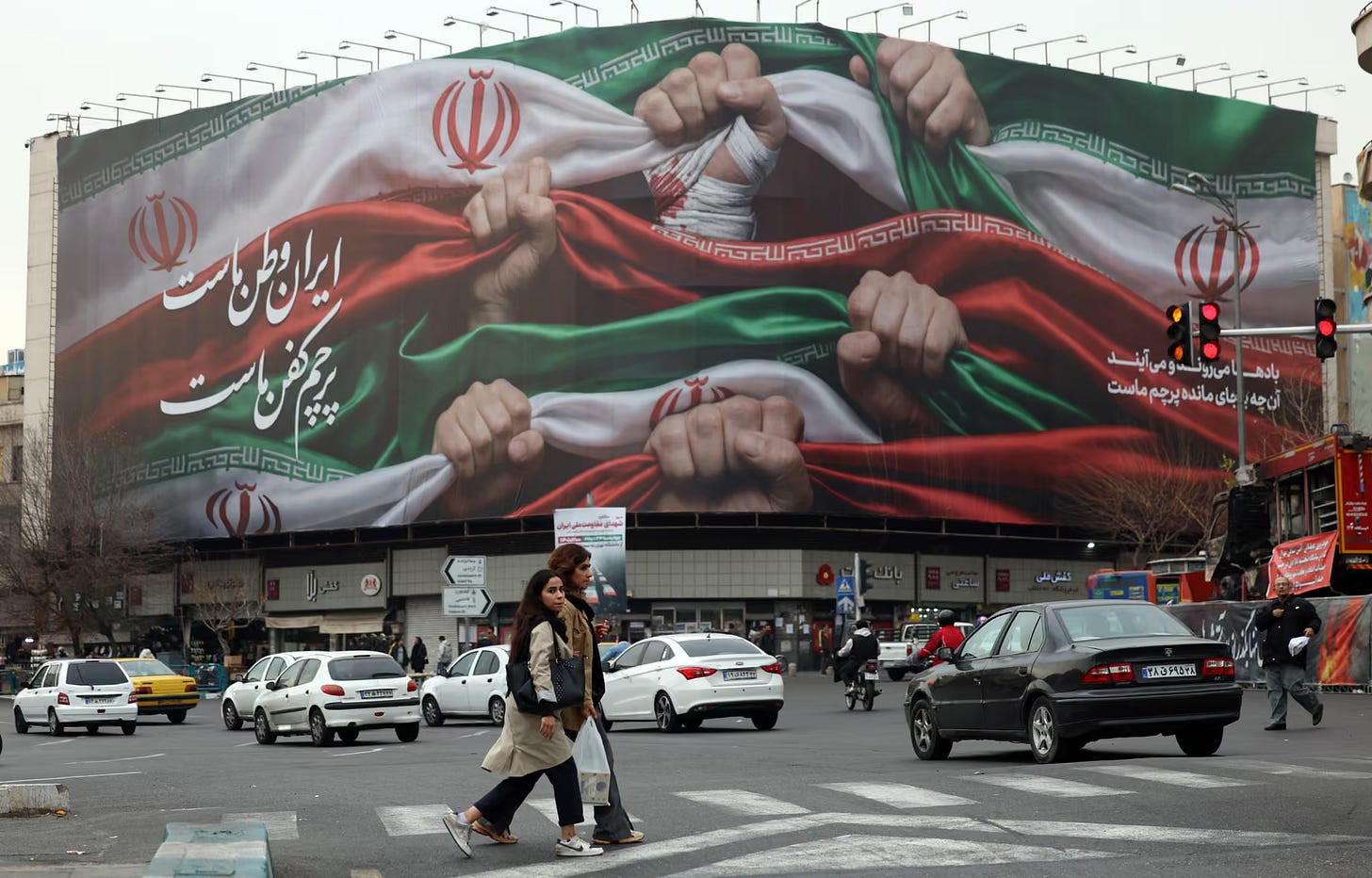
🟠 As the protests in Iran reduced in intensity following a brutal crackdown by the regime, the global attention switches to the question of whether or not the United States will conduct a military intervention. With the danger looming and Washington mobilizing a large force to the region, international and regional diplomatic efforts have been underway throughout the week to prevent another escalation that could affect the entire Middle East. The leaders in Tehran warned that their country is ready to strike back if an American attack takes place, as US President Donald Trump sent a naval strike group led by an aircraft carrier, the USS Abraham Lincoln, to Middle Eastern waters on Monday. Responding to this development, Hezbollah’s Secretary General Naim Qassem stated that the Lebanese group will consider any attack on Tehran also an attack against the organization.
Several countries in the region, including Saudi Arabia, stated that they will not allow their territory and military bases to be used to conduct attacks on Iran. They were joined, on Monday, by the United Arab Emirates, whose Foreign Ministry issued a statement reaffirming that the monarchy will decline requests for using its airspace, territory, or water in any “hostile military actions” against Iran. Egypt stepped up its diplomatic efforts to prevent an escalation, and on Wednesday, Foreign Minister Badr Abd al-Atty held phone calls with his Iranian counterpart, Abbas Araghchi, and the US Special Envoy for the Middle East, Steve Witkoff, warning against the risk of a new cycle of regional instability. Qatar intervened as well, with its leaders speaking with Iran’s Secretary of the Supreme National Security Council, Ali Larijani, on Wednesday, and with Iran’s President, Masoud Pezeshkian, on Thursday. Turkey is also actively involved, Ankara hosting Araghchi for an official visit on Friday, during which he met with his Turkish counterpart Hakan Fidan and with President Recep Tayyip Erdogan, sending a message that a US military strike is not an option. Moreover, Erdogan held a phone call with Pezeshkian to discuss the escalating military tensions.
Meanwhile, Ali Larijani was hosted by Russian President Vladimir Putin in Moscow on Friday, in a visit that was not previously announced and for which the authorities did not provide any further information about its content. Threats continued to be exchanged during the week between Iran and the US as another American warship entered the region’s waters, and as drones were deployed to survey the Iranian coast.
Internationally, the European Union decided, on Thursday, to designate the Islamic Revolutionary Guard Corps (IRGC) as a terrorist organization, a political action in response to the violent crackdown against the protesters, accusing the institution of orchestrating the repression, supplying weapons to Russia, launching ballistic missiles at Israel, and having close ties with allies such as Hezbollah, Hamas, and Ansar Allah in Yemen. Moreover, it adopted new sanctions against Iran and imposed restrictive measures against an additional 15 persons and six entities, including the Interior Minister Eskandar Momeni. The new sanctions on Momeni were mirrored on Friday by the US. On the same day, the UN Secretary General Antonio Guterres urged Iran and the US to restart diplomatic talks and warned that another conflict in the Middle East would put the world at risk.
As the world watches carefully and worried the evolution of the situation, and while the two parties trade threats, the US administration does not seem to have clear plans or strategies for what would come next in the event of a military intervention that succeeds in removing Ayatollah Ali Khamenei from power. The American Secretary of State Marco Rubio spoke this week before the Senate’s foreign relations committee during a hearing regarding the US actions in Venezuela earlier this month. When asked about the issue of replacing Khamenei, Rubio stated that it is “an open question. I mean, no one knows who would take over.” He added that Donald Trump has been presented with a wide range of possible actions concerning Iran, but that he always reserves the “pre-emptive defensive option.” In that regard, Rubio said that the United States needs to have “enough force and power in the region, just on a baseline, to defend against that possibility [of an Iranian attack].”
Inside Iran, the security forces conducted this week a campaign of mass arrests, rounding up thousands of people in an attempt to deter further protests, while President Masoud Pezeshkian has ordered the public release of the names of all victims who died during the demonstrations. Iran is now in a historic moment, and the regime is at its lowest in history when it comes to legitimacy. The unprecedented level of violence deepened the rupture between the state, whose message to the population is that it is incapable of providing security, an economy that allows for a decent life, and solutions to worsening issues, such as pollution and lack of drinking water. However, a military intervention will throw the country, and potentially the entire region, into chaos, especially since no regional or global power has a clear strategy regarding what happens next.
🟠 The Rafah Crossing between the Gaza Strip and Egypt is expected to reopen on Sunday for traffic in both directions, according to a statement issued on Friday by the Israeli Coordinator of Government Affairs in the Territories (COGAT). The EU and the Palestinian Authority will also be involved in conducting security screening of those leaving Gaza, while entrance will be subjected to a more thorough check by Israel. Return to Gaza will only be allowed for those who left after October 7, 2023.
🟠 An explosion took place on Saturday in the Iranian port of Bandar Abbas on the Strait of Hormuz. Speculations of an IRGC navy commander being targeted were dismissed by the semi-official Tasnim news agency, as tensions between Iran and the US are increasing. The Iranian media clarified that the source of the blast was a gas leak. Another explosion was later reported in Ahvaz, north of Bandar Abbas, killing four people. It too was said to be a gas explosion.
🟠 The political situation in Iraq evolved this week as former Prime-Minister Nouri al-Maliki has been nominated by the Shiite-led Coordination Framework (CF), the largest bloc in the parliament, as its candidate to lead the next government. Al-Maliki is accused by many voices of deepening the country’s sectarian politics, fueling corruption, and increasing tensions with Iraq’s Sunni neighbors. Donald Trump categorically rejected his nomination and threatened to end support for Iraq if he returned to power. Al-Maliki reacted and called Trump’s statement an interference in the country’s internal affairs.
Presidential elections have been scheduled to take place on Sunday, during the seventh parliamentary session in which the Iraqi legislative body is expected to choose the country’s next president. Under Iraq’s informal power-sharing agreement, the presidency is reserved for a Kurdish figure.
🟠 As discussions regarding the reopening of Gaza’s Rafah Crossing proceeded, Israel continued to violate the ceasefire throughout the week. Three Palestinians were killed by Israeli forces on Sunday in Gaza City, one on Monday in Gaza’s north, three more on Thursday east of Khan Younis, and at least five Palestinians died in an Israeli drone strike on Friday in central Gaza and Rafah. Moreover, house demolitions continued throughout the Palestinian territory.
President Mahmoud Abbas signed a decree on Tuesday amending the local elections law. The new stipulation will force candidates to recognize Israel, renounce armed struggle, and accept the official platform of the Palestine Liberation Organization (PLO), a move that effectively bans Hamas from running in the upcoming elections scheduled for April.
The remains of the last hostage held in Gaza were returned to Israel on Monday. Following this evolution, Donald Trump thanked the group for their efforts and affirmed that “[n]ow we need to disarm Hamas, as they promised” as part of the ceasefire agreement’s second phase. On Tuesday, Prime-Minister Benjamin Netanyahu said that Israel will now shift its focus to disarming Hamas and demilitarizing Gaza, adding that no reconstruction will be allowed until these goals are accomplished. According to the US envoy to the UN, Hamas weapons will be placed “permanently beyond use through an agreed process of decommissioning and supported by an internationally funded buyback and reintegration program.”
On their side, Hamas spokesperson Hazem Qassem stated on Wednesday that the group is ready to hand over the governance of Gaza to the National Committee for the Administration of Gaza (NCAG), a 15-member team of Palestinian technocrats created under the US-sponsored ceasefire agreement. However, Mousa Abu Marzouq, a senior Hamas official, said in an interview, contradicting Trump’s statement, that the movement never agreed to disarm and that it did not talk “for a single moment” about giving up its weapons. Last Sunday, a Hamas delegation led by Khalil al-Hayya was hosted by Turkey’s foreign minister in Ankara to discuss progress on the second phase of the ceasefire.
In a major escalation on Saturday, Israel struck Gaza, killing at least 32 Palestinians, including at least six children. The strikes took place in Gaza City and Khan Younis and they come one day before the scheduled reopening of the Rafah border crossing.
🟠 Israel also continued its ceasefire violations in Lebanon this week. Two people were killed in the country’s south last Sunday in an airstrike that, according to the Israeli army, targeted a Hezbollah “weapons manufacturing site.” Two additional people have been killed in a drone strike that targeted a car on Monday on the Kfar Roummane road, while several areas in south Lebanon were targeted by at least 17 Israeli airstrikes on Friday.
During a visit to the French capital of Paris, Lebanon’s Prime Minister Nawaf Salam warned, after a meeting with France’s President Emmanuel Macron, that Lebanon will need a form of international force in the south after the withdrawal of the UN peacekeeping mission, UNIFIL, scheduled for 2027. He emphasized that the force is needed largely because of a “history of hostility” with Israel. In a statement published on Monday, UNIFIL said that it has supported the Lebanese army in deploying to around 130 permanent positions in south Lebanon since November 2024 and referred more than 400 weapons caches and military infrastructure to the army.
The US embassy in Beirut issued a statement on Friday clarifying speculations over the fate of the committee monitoring the cessation of hostilities between Lebanon and Israel, following long delays in its meetings. It noted that the committee is scheduled to meet again in late February, and it follows news that the Lebanese Armed Forces Commander Gen. Rodolphe Haykal will travel to Washington for a three-day visit to meet with several unnamed American officials.
🟠 Qatar launched last Sunday the fourth edition of the Arabian Gulf Security exercise, bringing together forces from the Gulf Cooperation Council states and US specialized units. The drill will run through February 4 and includes over 70 simulated scenarios and more than 260 hours of intensive field training.
🟠 In light of the recent developments in Yemen that saw direct clashes between rival groups supported by Saudi Arabia and the United Arab Emirates, Riyadh’s Foreign Minister Prince Faisal bin Farhan bin Abdullah, speaking from Poland’s capital of Warsaw, emphasized on Monday the importance of relations between Saudi Arabia and the UAE for the region’s stability. He acknowledged that, in Yemen, there are differences in visions and stated that if the UAE has indeed left Yemen, Saudi Arabia “will take responsibility.”
Saudi and Israeli defense and intelligence officials visited Washington this week, according to several sources, including the Saudi Defense Minister Prince Khalid bin Salman and Israel’s head of military intelligence Gen. Shlomi Binder. The two held meetings with top officials at the Pentagon, the CIA, the White House, as well as with Secretary of State Marco Rubio and Middle East Envoy Steve Witkoff.
🟠 Just one day after the extension of a ceasefire between the mostly Kurdish Syrian Democratic Forces (SDF) and governmental forces, SDF launched a drone and rocket attack in Aleppo, northern Syria, on Sunday. No injuries were reported. On Thursday, fighting escalated, with at least 10 members of the SDF being killed in government attacks attempting to cut off the group’s supply routes. According to sources from Iraq’s Kurdistan Region, cited by The New Arab, hundreds of armed Iraqi Kurds have crossed from Iraq into northeastern Syria from the beginning of the week.
Meanwhile, Syria’s interim President Ahmad al-Shara’a conducted on Wednesday his second visit to Moscow since assuming power in December 2024. He met with his Russian counterpart, Vladimir Putin, to discuss bilateral issues and the situation in Syria and the region, including the presence of Russian military bases in Syria. Kremlin’s spokesperson Dmitry Peskov confirmed that the issue was addressed but added that the meeting between the two leaders largely focused on bilateral trade and economic relations. On Friday, al-Shara’a held a phone call with the Emirati leader, Sheikh Mohammad bin Zayed Al Nahyan, to discuss ways to support Syria, including the UAE’s potential role in reconstruction efforts.
🟠 The Emirati president also visited Moscow on Thursday in an official trip that included meetings with Vladimir Putin and other Russian officials. The two discussed bilateral relations, while the latter praised the role played by the UAE in hosting negotiations between Russia and Ukraine. Following the visit, Mohammad bin Zayed held a phone call with US Secretary of State Marco Rubio on Friday, reviewing the current situation in the Gaza Strip and other regional issues. On the same day, he spoke on the phone with Iran’s President Masoud Pezeshkian in a conversation regarding relations between the two countries, emphasizing the need for diplomatic solutions to the current crisis.
🟠 The United Nations’ World Food Program announced that it is shutting down its operations in the Ansar Allah-controlled northern Yemen following a crackdown conducted by the group on UN workers and other aid groups. The organization blamed the “insecure operating environment” in the region and added that 365 staff members will lose their jobs by the end of March.
What to Follow
🟠 As Iran’s protests largely subsided, global attention focuses on a potential military intervention by the United States. While the regime constantly loses its legitimacy following the brutal repression of the latest round of demonstrations, it is important to follow the extent to which the violence will prevent future protests. A military intervention might lead to regime change, but it will definitely create a highly unstable environment in Iran that may be characterized by unrest, lack of governance, migration flows in the region, and even civil war. The following days and weeks are crucial for Iran’s future and will depend on the American decision regarding military actions, but also on the positioning of the political and clerical elites in Tehran.
🟠 As the second phase of the ceasefire agreement in the Gaza Strip begins and the scheduled reopening of the Rafah Crossing is supposed to take place on Sunday, negotiations over Hamas’s disarmament will be crucial for the sustainability of the truce. Furthermore, the NCAG will soon start its work for governing Gaza after Hamas agreed to hand over political power in the Palestinian territory, but its performance might be affected by several factors, including Israel’s refusal to allow reconstruction to begin. Last but not least, it is important to consider what role Hamas still plays in the landscape of the Gaza Strip. If it gives up power, which effectively sidelines it from any decision-making regarding the enclave, this would mean that the only means of having a word to say when it comes to Gaza is through its weapons, making it less likely to agree to disarmament. The positioning of its leaders in the next weeks will be definitive for the success of the ceasefire agreement.
